
Peter Redgrove’s 1988 work delves into esoteric realms, blending mythology, Jungian psychology, and Eastern practices.
The book, available in hardcover, explores the archetype of the Black Goddess and the hidden dimensions of reality.
It’s a complex study, often described as speculative, yet influential in alternative spirituality.
Overview of Peter Redgrove’s Work
Peter Redgrove (1937-2013) was a British poet, novelist, and esoteric scholar known for his interdisciplinary approach to spirituality and mythology. He wasn’t confined to a single academic discipline, instead drawing from Jungian psychology, Taoism, yoga, and Gnosticism to formulate his unique theories.
His writing often centers on altered states of consciousness and the exploration of hidden realities, seeking to “open the doors of perception” through myth and the marvelous.
Redgrove’s work frequently features a focus on the feminine divine, particularly the “Black Goddess” archetype, which he saw as a powerful, often misunderstood force. He authored 97 books on Goodreads, with “The Black Goddess and the Unseen Real” being his most popular, garnering 2601 ratings.
His style is characterized by speculation and a willingness to challenge established knowledge, making him a controversial yet compelling figure in the field of alternative spirituality.
Publication Details and Editions
“The Black Goddess and the Unseen Real” was first published in 1988 by Grove Press. The initial edition was released as a hardcover, bearing the ISBN-13: 9780802110541 and ISBN-10: 0802110541.
The book spans 224 pages and features a dust jacket, described as being in “Very Good” condition with a “Good” dust jacket, showcasing a photo and title in white lettering.
Currently, the book is available through various online booksellers. Amazon.com offers the title, while Abebooks lists copies in varying conditions. Finding a first edition can be challenging, potentially increasing its value to collectors.
While the publication date is definitively June 1988, specific details regarding subsequent editions or reprints are less readily available. The format remains primarily hardcover, though digital versions (PDFs) may be found through unofficial sources online.
Initial Reception and Critical Response
“The Black Goddess and the Unseen Real” garnered a mixed initial reception, often noted for its ambitious scope and unconventional approach. Critics acknowledged Redgrove’s extensive research but frequently pointed to a lack of organization and a tendency towards “muddy speculation.”
The book’s blend of Jungian psychology, Taoism, yoga, and Gnosticism was seen as both innovative and overwhelming, leaving some readers struggling to follow Redgrove’s complex arguments.
Contemporary reviews highlighted the book’s exploration of the Black Goddess archetype and the “unseen real,” but questioned the validity of its more speculative claims. Goodreads data indicates 2601 ratings for Peter Redgrove’s books, with “The Black Goddess…” being his most popular work, though specific ratings for this title are currently unavailable. Despite criticisms, the book found a dedicated readership among those interested in esoteric studies and alternative spirituality, continuing to spark debate and discussion.

The Core Concept: The Black Goddess
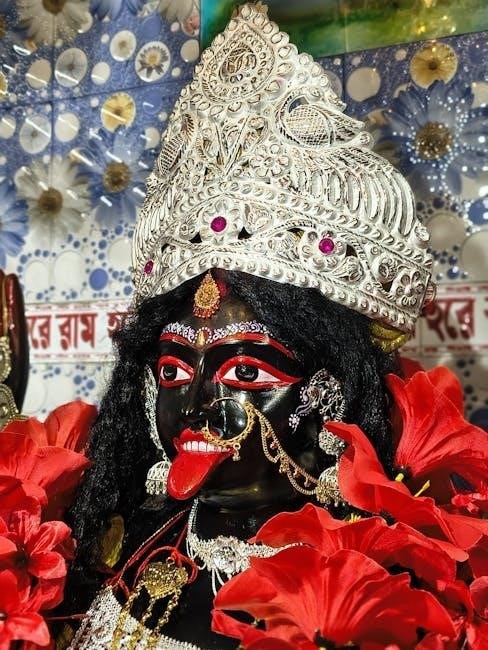
Redgrove’s central idea revolves around the Black Goddess archetype, embodied in figures like Isis and African tribal deity Oduda, representing a powerful, hidden force.
Defining the Black Goddess Archetype
Redgrove posits the Black Goddess as a primal, often overlooked aspect of the divine feminine. She isn’t simply the negation of the traditional “good” goddess, but a force representing the chaotic, creative void from which all things emerge. This archetype embodies the unconscious, the shadow self, and the potent energy of transformation.
Unlike readily accessible deities, the Black Goddess dwells in the “unseen real,” demanding a shift in perception to be understood. She’s connected to the darker aspects of nature – the fertile darkness of the earth, the mysteries of the night, and the power of decay and rebirth.
This archetype isn’t inherently evil, but rather amoral, existing beyond conventional ethical frameworks. Redgrove suggests engaging with this figure requires confronting one’s own repressed emotions and shadow aspects, leading to profound psychological and spiritual growth. The exploration of this archetype is a journey into the depths of the psyche and the hidden currents of existence.
Isis as a Manifestation of the Black Goddess
Redgrove identifies Isis, the ancient Egyptian goddess, as a significant manifestation of the Black Goddess archetype. However, he moves beyond the conventional image of Isis as a benevolent mother and healer, highlighting her darker, more mysterious aspects. He points to her association with magic, her role in resurrecting Osiris – a journey through death and the underworld – and her fierce protectiveness.
This interpretation emphasizes Isis’s connection to the hidden realms and her power over life and death. Redgrove argues that the traditional understanding of Isis often obscures her deeper, more primal nature, which aligns with the characteristics of the Black Goddess.
He suggests that recognizing this darker side of Isis allows for a more complete and nuanced understanding of the goddess and her enduring influence. It’s a reclaiming of a forgotten power, a recognition of the shadow within the divine feminine, and a key to unlocking deeper spiritual insights.
Oduda and African Tribal Connections
Redgrove extends the concept of the Black Goddess beyond Egyptian mythology, drawing connections to African tribal traditions, specifically referencing Oduda, “the Black One.” He posits that Oduda represents a similar primal feminine force found in various African cultures, embodying both creative and destructive energies.
This exploration ventures into less-documented spiritual practices, suggesting a universal archetype manifesting across diverse cultural contexts. Redgrove doesn’t present Oduda as a direct equivalent to Isis, but rather as a parallel expression of the same underlying power – a dark, potent, and often feared feminine deity.
He implies that these tribal connections offer a glimpse into the ancient roots of the Black Goddess archetype, predating and influencing more widely known mythological figures. This aspect of the book is particularly speculative, relying on anthropological observations and interpretations.
The Black Goddess in Comparative Mythology
Redgrove doesn’t confine the Black Goddess to a single pantheon; he argues for her presence, albeit often veiled or fragmented, across numerous mythologies. This comparative approach seeks to identify recurring motifs and symbolic representations of this powerful archetype.
Beyond Isis and Oduda, the book hints at connections to other dark feminine figures found in various cultures, though these are less explicitly detailed. Redgrove suggests that the suppression or demonization of these goddesses often reflects a patriarchal tendency to control and diminish feminine power.
He proposes that understanding the Black Goddess archetype requires looking beyond surface-level narratives and delving into the underlying psychological and energetic forces at play. This comparative lens aims to reveal a universal pattern, a primal feminine energy that transcends cultural boundaries.
Exploring the “Unseen Real”
Redgrove integrates Jungian concepts, Taoist sexual practices, yogic methods, and Gnostic wisdom to explore altered states and perceive hidden realities.
This blend aims to unlock perception.
Jungian Influences on Redgrove’s Theories
Redgrove’s exploration of the “Unseen Real” is deeply rooted in the psychological theories of Carl Jung. He utilizes Jungian archetypes, particularly the concept of the Shadow, to understand the Black Goddess as a powerful, often repressed, aspect of the collective unconscious.
The Black Goddess, in this context, isn’t merely a mythological figure but a symbolic representation of the primal feminine, embodying both creative and destructive forces. Redgrove suggests that confronting this archetype is crucial for psychological wholeness, mirroring Jung’s emphasis on integrating the shadow self.
He views myth not as primitive superstition, but as a language of the unconscious, offering insights into the human psyche. This aligns with Jung’s belief that myths are expressions of universal, archetypal patterns. Redgrove’s work, therefore, attempts to decode these patterns to reveal the hidden structures of reality and the potential for expanded consciousness, drawing heavily from Jungian analytical psychology.
Taoist Sexual Practices and their Role
Redgrove integrates Taoist sexual practices, specifically those focused on cultivating chi (life force energy), into his framework for accessing the “Unseen Real.” He posits that these practices, traditionally involving specific breathing techniques and partnered exercises, can unlock heightened states of awareness and facilitate encounters with the archetypal realm.
The author suggests that sexual energy, when consciously directed, becomes a potent catalyst for spiritual transformation. This isn’t simply about physical pleasure, but about transmuting libidinal energy into spiritual power, a core tenet of certain Taoist schools.
Redgrove connects these practices to the Black Goddess archetype, viewing the union of male and female energies as a symbolic reenactment of cosmic creation and a pathway to experiencing the divine. His approach, however, is often described as speculative and draws criticism for potentially misinterpreting or oversimplifying complex Taoist traditions.
Yogic Methods and Perception
Redgrove explores how Yogic methods, particularly those aimed at altering states of consciousness, contribute to perceiving the “Unseen Real.” He draws parallels between Yogic practices – such as pranayama (breath control) and dhyana (meditation) – and the opening of “doors of perception,” a recurring theme in his work.
The author suggests that these techniques can quiet the rational mind, allowing access to deeper layers of the psyche and a more direct experience of reality beyond conventional sensory limitations. He believes Yogic disciplines facilitate a shift in perception, enabling individuals to glimpse the archetypal forces at play in the universe.
Redgrove links this altered perception to encounters with the Black Goddess, suggesting that she reveals herself more readily to those who have cultivated inner stillness and expanded their awareness through Yogic practice. However, his integration of Yogic concepts is often viewed as eclectic and potentially lacking in rigorous scholarly grounding.
Gnostic Wisdom and the Hidden World
Redgrove incorporates Gnostic ideas into his framework of the “Unseen Real,” viewing Gnosticism as a tradition that sought direct knowledge of the divine through personal experience, bypassing institutionalized religion. He aligns Gnostic cosmology – the belief in a hidden spiritual reality obscured by a flawed material world – with his own exploration of archetypes and altered states of consciousness.
The author suggests that the Black Goddess embodies a Gnostic principle, representing a primordial, feminine force that predates and transcends the limitations of the created order. He posits that accessing this hidden world requires a dismantling of conventional perceptions and a willingness to embrace paradoxical truths.
Redgrove’s interpretation of Gnosticism, like his other influences, is often described as speculative and drawing from a broad range of sources. He uses Gnostic mythology to support his claims about the existence of a deeper, unseen reality accessible through altered states and symbolic understanding.

Key Themes and Ideas
Redgrove’s work centers on expanding perception, utilizing myth and the marvelous.
He explores the boundaries between speculation and established knowledge, advocating for “uncommon sense” in understanding reality’s hidden layers.
Opening Doors of Perception
Redgrove’s central aim in “The Black Goddess and the Unseen Real” is to unlock altered states of consciousness and expand human perception beyond conventional limits. He posits that the “unseen real” is not merely a metaphysical concept, but a tangible dimension accessible through specific practices and a shift in worldview.
This exploration draws heavily from diverse sources, including Jungian psychology – specifically, the concept of the collective unconscious and archetypes – and Eastern traditions like Taoism and Yoga. Redgrove suggests that techniques like Taoist sexual practices and yogic methods can serve as catalysts for breaking down perceptual barriers.
The book proposes that myth, particularly the archetype of the Black Goddess, functions as a key to unlocking these hidden realms. By engaging with myth and the “marvelous,” individuals can begin to dismantle ingrained assumptions and open themselves to a more expansive understanding of reality. However, Redgrove acknowledges the potential for this journey to veer into “muddy speculation,” emphasizing the need for careful discernment.
Myth and the Marvelous in Redgrove’s Writing
Redgrove intricately weaves myth and the concept of the “marvelous” throughout “The Black Goddess and the Unseen Real,” positioning them as vital tools for accessing altered states of consciousness. He doesn’t treat myth as mere storytelling, but as a repository of ancient wisdom and symbolic keys to unlocking hidden dimensions of reality.
The archetype of the Black Goddess, central to his work, embodies this “marvelous” quality – a potent, often unsettling force that challenges conventional perceptions. Redgrove explores manifestations of this archetype in figures like Isis and African tribal deities like Oduda, the Black One, suggesting a universal pattern underlying diverse mythologies.
He argues that engaging with these myths, and embracing the “marvelous” – the extraordinary and seemingly impossible – allows individuals to transcend the limitations of rational thought and open themselves to a more expansive, intuitive understanding of the universe. However, this approach is not without its critics, who view Redgrove’s interpretations as speculative and lacking rigorous evidence.
Speculation vs. Established Knowledge
Redgrove’s work in “The Black Goddess and the Unseen Real” frequently navigates the boundary between informed speculation and established academic knowledge. Critics often point to a tendency towards “muddy speculation,” suggesting his synthesis of Jungian psychology, Taoism, yoga, and Gnostic wisdom lacks a firm grounding in empirical evidence.
He readily draws connections between disparate fields, proposing theories about the nature of perception and reality that extend beyond conventional scientific understanding. While this interdisciplinary approach is a strength, it also opens him up to accusations of unsubstantiated claims and overly ambitious generalizations.
Redgrove isn’t necessarily attempting to prove his theories in a traditional scientific sense, but rather to explore possibilities and offer a different framework for understanding the unseen realms. He prioritizes experiential knowledge and intuitive insight over strict adherence to established paradigms, a characteristic that both attracts and alienates readers.
The Nature of Uncommon Sense
Redgrove’s title, “The Black Goddess and the Unseen Real: Our Uncommon Sense,” hints at a core concept – a re-evaluation of what constitutes ‘common sense.’ He proposes that conventional understanding limits our perception of reality, obscuring access to deeper, more profound truths.
This ‘uncommon sense’ isn’t irrationality, but rather a heightened awareness cultivated through altered states of consciousness, mythic exploration, and engagement with esoteric traditions. It’s a way of knowing that transcends logical deduction and embraces intuitive insight.
The book suggests that by opening ‘doors of perception,’ as alluded to in online discussions, we can access a hidden world governed by different principles than those of everyday experience. This requires a willingness to challenge assumptions and embrace the marvelous, venturing beyond the confines of established knowledge. Redgrove champions a holistic worldview, integrating subjective experience with objective inquiry.

Analyzing Redgrove’s Approach
Redgrove’s method is notably interdisciplinary, weaving together Jungian ideas, Taoism, yoga, and Gnostic wisdom.
Critics note a tendency towards “muddy speculation,” despite its ambitious scope and unique spiritual perspective;
The Blend of Disciplines
Peter Redgrove’s work stands out due to its remarkable synthesis of diverse intellectual and spiritual traditions. He doesn’t confine himself to a single school of thought, instead, he boldly integrates concepts from analytical psychology – particularly the work of Carl Jung – with ancient Taoist sexual practices, and the profound insights offered by Yogic methodologies.
Furthermore, Redgrove draws heavily from Gnostic wisdom, exploring hidden realms and esoteric knowledge systems. This eclectic approach centers around his core concept: the Black Goddess, embodied in figures like Isis and African tribal deities such as Oduda, “the Black One.”
This blending isn’t merely additive; Redgrove attempts to demonstrate how these seemingly disparate disciplines illuminate each other, offering a holistic understanding of consciousness, perception, and the “unseen real.” He seeks to uncover underlying patterns and connections that transcend conventional boundaries of knowledge.
Strengths of Redgrove’s Interdisciplinary Method
Redgrove’s greatest strength lies in his ability to forge connections between seemingly unrelated fields, offering a uniquely expansive perspective. By juxtaposing Jungian archetypes with Taoist and Yogic practices, he creates a richer, more nuanced understanding of the human psyche and its potential for altered states of consciousness.
This approach allows for a multi-faceted exploration of the “unseen real,” moving beyond the limitations of any single discipline. His focus on the Black Goddess archetype provides a unifying thread, demonstrating how similar motifs appear across diverse cultures and mythologies.
The interdisciplinary nature of his work encourages readers to question established paradigms and consider alternative ways of knowing. It fosters a sense of intellectual curiosity and opens doors to deeper self-exploration, making the book a stimulating read for those interested in spirituality and mythology.
Weaknesses and Criticisms of his Approach
Redgrove’s ambitious synthesis of diverse disciplines is also his primary weakness. Critics often point to a lack of rigorous academic methodology, characterizing his work as “muddy speculation” and lacking concrete evidence. The broad scope sometimes sacrifices depth, leading to superficial treatments of complex subjects like Jungian psychology and Taoist sexual practices.
His reliance on personal interpretation and subjective experience can be seen as a departure from established scholarly standards. The blending of myth and the marvelous, while intriguing, can blur the lines between speculation and verifiable knowledge.
Some find his approach overly esoteric and inaccessible, requiring a significant pre-existing knowledge base to fully grasp his concepts. This can limit the book’s appeal to a wider audience and invite accusations of intellectual obscurity.
Redgrove’s Unique Perspective on Spirituality
Peter Redgrove presents a strikingly unconventional spiritual vision, one that transcends traditional religious boundaries. He posits that accessing altered states of consciousness – “opening the doors of perception” – is key to understanding the “unseen real.” This isn’t achieved through dogma, but through a deliberate exploration of myth, the marvelous, and embodied practices.
His focus on the Black Goddess archetype, embodying both creation and destruction, challenges conventional notions of the divine feminine. He views her not as a benevolent mother figure, but as a powerful, primal force.

Redgrove’s spirituality is deeply rooted in experience, advocating for a direct engagement with the mystical through techniques borrowed from Taoism, Yoga, and Gnosticism. He champions “uncommon sense,” a form of intuitive wisdom gained through expanded awareness.
The Book’s Legacy and Impact

“The Black Goddess and the Unseen Real” maintains relevance, garnering 2601 Goodreads ratings and remaining available through Amazon and Abebooks in hardcover editions.
Peter Redgrove’s Other Works
Peter Redgrove was a prolific author, extending his explorations beyond The Black Goddess and the Unseen Real into diverse areas of mythology, poetry, and esoteric thought. Goodreads lists 97 books attributed to him, showcasing a remarkably broad literary output.
His writing frequently engages with archetypal themes and the intersection of consciousness and the natural world. While The Black Goddess remains his most popular work, other titles demonstrate a consistent interest in shamanism, altered states of consciousness, and the power of myth.
Redgrove’s poetic works often mirror the mystical and visionary quality found in his prose, further illustrating his holistic approach to understanding reality. He consistently sought to bridge the gap between scientific inquiry and spiritual experience, a characteristic evident throughout his bibliography. Exploring his other books provides a deeper understanding of the foundations of his unique perspective.
Goodreads Ratings and Reader Reception
The Black Goddess and the Unseen Real currently holds a notable presence on Goodreads, with 2601 ratings attributed to Peter Redgrove’s work. This indicates a significant level of engagement from readers interested in esoteric and mythological studies.
The book’s reception appears to be varied, reflecting its challenging and unconventional nature. Readers often describe it as intellectually stimulating but also dense and requiring careful consideration. Many appreciate Redgrove’s interdisciplinary approach, while others find his speculations somewhat abstract or lacking in concrete evidence.
Discussions on Goodreads reveal a community of readers fascinated by the book’s exploration of the Black Goddess archetype and the potential for expanded consciousness. It clearly resonates with those seeking alternative perspectives on spirituality and the nature of reality, fostering ongoing debate and interpretation.

Availability and Current Editions (Amazon, Abebooks)
The Black Goddess and the Unseen Real by Peter Redgrove, originally published in 1988 by Grove Press, maintains a presence in the current book market, though primarily through secondary sellers. Amazon.com lists the book for sale, offering copies from various third-party vendors. Prices fluctuate depending on condition and seller.
Abebooks.com also features multiple copies, ranging in condition from “Very Good” to acceptable, with dust jackets often included. These listings typically offer a wider price range, reflecting the book’s age and collectibility. The hardcover edition (ISBN-13: 9780802110541, ISBN-10: 0802110541) is the most commonly available format.
While a dedicated PDF version isn’t officially offered by the publisher, used copies can be found online. Prospective buyers should carefully review the condition descriptions and seller ratings before purchasing.
The Book’s Continued Relevance Today
The Black Goddess and the Unseen Real, despite being published in 1988, continues to resonate with readers interested in esoteric spirituality, Jungian archetypes, and comparative mythology. Peter Redgrove’s interdisciplinary approach—weaving together Taoism, yoga, and Gnostic wisdom—remains compelling for those seeking alternative perspectives on consciousness and the divine feminine.
The book’s exploration of the “unseen real” aligns with contemporary interests in altered states of perception and the power of myth. While some criticize its speculative nature, its influence is evident in modern pagan and witchcraft communities. The archetype of the Black Goddess, as presented by Redgrove, offers a potent symbol for shadow work and reclaiming marginalized aspects of the psyche.
Though a readily available PDF version is scarce, the book’s ideas continue to circulate and inspire discussion online, demonstrating its enduring appeal.