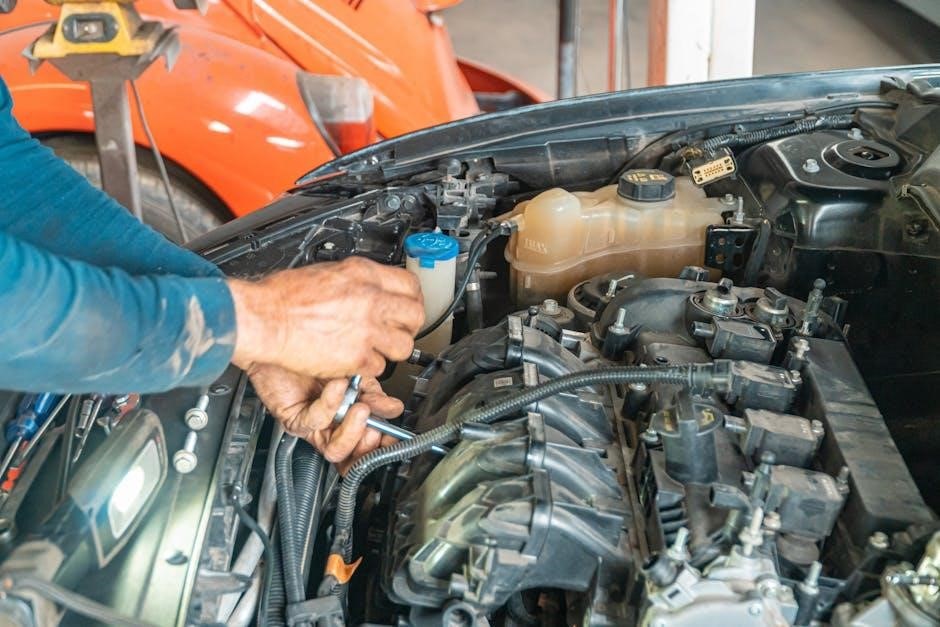
The allure of a driver-connected experience fuels the demand for rapid manual vehicles. These cars blend raw power with engaging control, offering thrilling acceleration and speed.
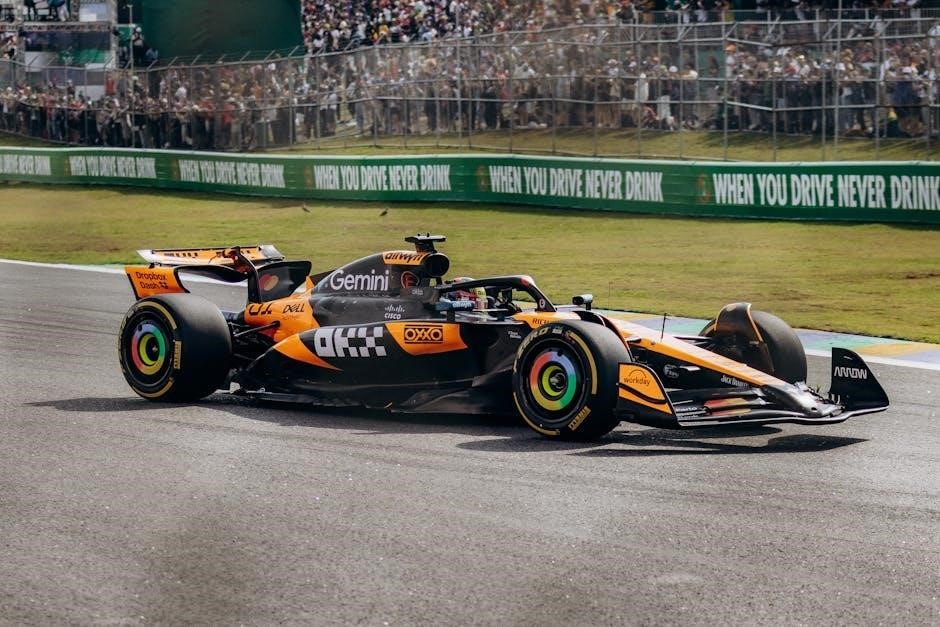
Defining “fastest” centers on quantifiable metrics like 0-60 mph times and overall performance. Modern examples, such as the Toyota GR Yaris, achieve impressive speeds with manual transmissions.
The Appeal of a Manual Transmission
For driving enthusiasts, the manual transmission represents a direct connection to the machine. It’s a tactile experience, demanding driver involvement and rewarding skillful operation – a stark contrast to the detachment of many modern automatics. This engagement isn’t merely nostalgic; it translates to a heightened sense of control, allowing drivers to precisely manage power delivery and maintain the optimal gear for any situation.
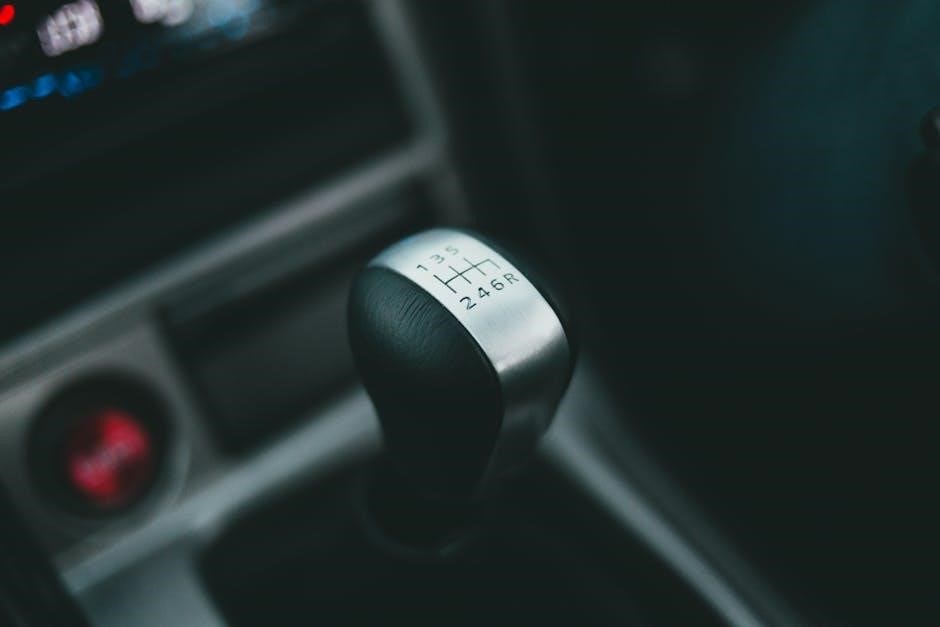
In the context of fastest cars, a manual gearbox isn’t always about achieving the absolute quickest times. While dual-clutch transmissions often edge out manuals in pure acceleration, the manual offers a unique challenge and satisfaction. Cars like the Porsche 911 GT3 RS and Honda Civic Type R demonstrate that exhilarating performance and a manual transmission aren’t mutually exclusive. The driver becomes an integral part of the performance equation, mastering the art of heel-toe downshifting and perfectly timed gear changes.
This level of control fosters a deeper connection with the vehicle, enhancing the overall driving experience. It’s a purist’s choice, prioritizing feel and involvement over sheer numerical speed, and it’s a key reason why manual transmissions continue to thrive in the realm of high-performance automobiles.
Defining “Fastest”: 0-60 mph and Beyond
When evaluating the “fastest” manual cars, objective metrics are crucial, with 0-60 mph acceleration being the most commonly cited benchmark. This figure represents initial acceleration, showcasing a car’s ability to rapidly deploy its power. However, a low 0-60 time doesn’t tell the whole story; sustained performance is equally important.
Therefore, quarter-mile times provide a more comprehensive measure of overall acceleration capability. This metric reveals how effectively a car maintains its momentum over a longer distance, highlighting engine power and drivetrain efficiency. Top speed, while less relevant for everyday driving, demonstrates a vehicle’s ultimate potential and aerodynamic limitations.
Crucially, these figures are influenced by factors beyond raw horsepower. The power-to-weight ratio – the amount of power generated per unit of weight – is a critical determinant of acceleration. A lighter car with comparable power will consistently outperform a heavier one. Examining these combined metrics provides a nuanced understanding of a manual car’s true speed and performance characteristics, going beyond a single 0-60 mph number.
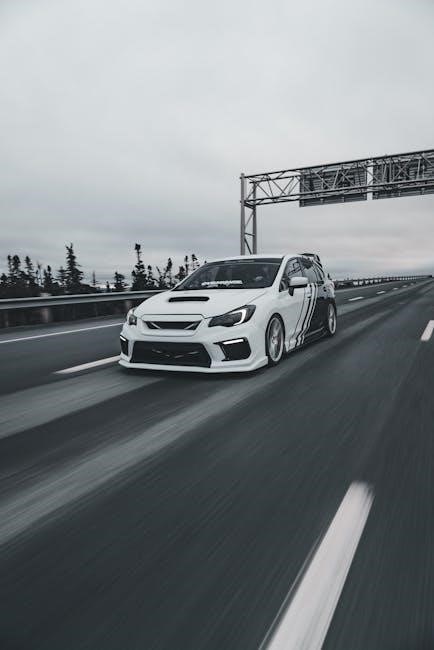
Performance Metrics & Key Considerations
Assessing speed requires examining 0-60 mph, quarter-mile times, and top speed. Power-to-weight ratio is vital, alongside transmission design and aerodynamic efficiency for optimal results.
0-60 mph Times: The Standard Benchmark
The 0-60 mph acceleration time remains the most widely recognized metric for evaluating a car’s performance capabilities. It provides a concise and easily comparable figure, representing a vehicle’s initial burst of speed and responsiveness. For manual transmission cars, achieving a quick 0-60 mph time demands a precise blend of engine power, efficient gear ratios, and skillful driver input.
Historically, a sub-5 second 0-60 mph time was considered exceptional. However, modern performance cars, even those with manual transmissions, are routinely achieving times well below this mark. The 2012 Ford Mustang Boss 302, for instance, managed a 0-60 mph sprint in the low four-second range. Newer models, like the Porsche 911 GT3 RS, push these boundaries even further, demonstrating the advancements in engine technology and chassis design.
Factors influencing 0-60 mph times include traction control, launch control systems (if equipped), and the driver’s ability to execute seamless gear changes. A missed shift or wheelspin can significantly impact the final result. Therefore, while the car’s inherent potential is crucial, the driver’s skill plays a vital role in maximizing acceleration.
Quarter-Mile Times: Measuring Overall Acceleration
While 0-60 mph focuses on initial acceleration, the quarter-mile time provides a more comprehensive assessment of a car’s overall performance. Covering a distance of 1320 feet, it measures a vehicle’s ability to maintain acceleration throughout a longer sprint, revealing its power delivery and sustained performance capabilities.
For manual transmission cars, a strong quarter-mile time necessitates not only potent engine output but also a well-matched transmission and the driver’s proficiency in consistently executing optimal gear changes. A slight hesitation during a shift can translate into a significant loss of time over the quarter-mile distance.
Historically significant cars like the Ferrari Enzo and McLaren F1 demonstrated exceptional quarter-mile performance, showcasing the potential of high-performance manual transmissions. Modern examples, such as the Chevrolet Corvette Z06, continue to push these limits. Times in the 10-second range are now achievable for many high-performance manual cars, highlighting the advancements in automotive engineering.
Analyzing quarter-mile times alongside 0-60 mph figures offers a more nuanced understanding of a car’s acceleration profile.
Top Speed: Reaching the Limit
Top speed represents the ultimate expression of a car’s performance potential, signifying the point where engine power overcomes all aerodynamic and mechanical resistance. For fastest manual cars, achieving a high top speed isn’t solely about horsepower; it’s a delicate balance of engine output, aerodynamic efficiency, and drivetrain optimization.
Cars like the McLaren F1 famously broke top speed barriers, demonstrating the capabilities of a well-engineered manual transmission in a high-performance application. Modern examples, such as certain Porsche 911 variants, continue to push these boundaries, often exceeding 200 mph.
However, reaching top speed requires not only a powerful engine and streamlined aerodynamics but also a driver skilled in precise gear selection. Maintaining optimal engine RPM within the peak power band is crucial for maximizing velocity.
Factors like road conditions and atmospheric pressure also influence achievable top speed. Testing is often conducted on high-speed proving grounds to ensure accurate and repeatable results. The Toyota GR Yaris, for instance, boasts a top speed of 230 km/h.
Power-to-Weight Ratio: A Crucial Factor
The power-to-weight ratio is arguably the most significant determinant of a car’s acceleration and overall performance, especially within the realm of fastest manual cars. It represents the amount of power an engine generates relative to the vehicle’s mass, expressed as horsepower per ton or kilograms.
A lower weight combined with higher horsepower results in a superior power-to-weight ratio, translating to quicker acceleration and improved responsiveness. Cars like the Toyota GR Yaris exemplify this principle, utilizing lightweight materials and a potent engine to achieve impressive performance.
Manufacturers actively pursue weight reduction strategies, employing materials like carbon fiber and aluminum to minimize mass without compromising structural integrity. Simultaneously, engine tuning and forced induction technologies, such as turbocharging, are employed to maximize power output.
A favorable power-to-weight ratio allows a car to overcome inertia more effectively, resulting in faster 0-60 mph times and enhanced track performance. The Ford Mustang Boss 302 (2012), with its 412 bhp and relatively low weight, demonstrated the benefits of this principle.
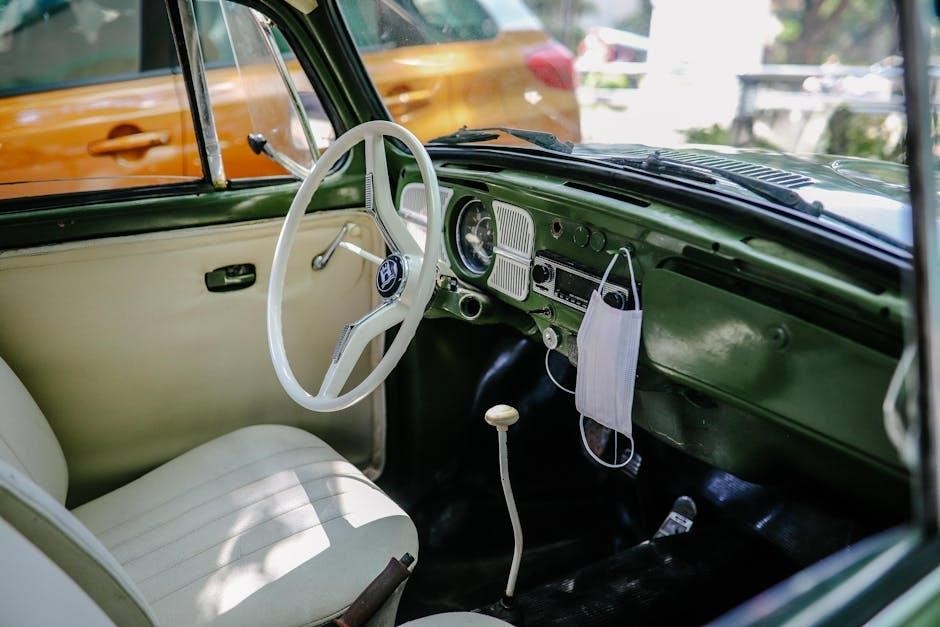
Top Tier Fastest Manual Cars (Current Models)
Currently, Porsche 911 GT3 RS, Toyota GR Yaris, Honda Civic Type R, and Chevrolet Corvette Z06 stand out. These models deliver exceptional speed and driver engagement.
Porsche 911 GT3 RS (992) ─ A Track Weapon
The Porsche 911 GT3 RS (992) represents the pinnacle of track-focused performance within the 911 lineage. This isn’t merely a sports car; it’s a meticulously engineered machine designed to dominate circuits. Its naturally aspirated 4.0-liter flat-six engine produces an exhilarating power output, delivering a visceral driving experience amplified by the engaging manual transmission.
Aerodynamics are paramount, featuring an aggressive body kit generating substantial downforce. This ensures exceptional grip and stability, allowing drivers to confidently push the limits. The 911 GT3 RS isn’t about straight-line speed alone; it’s about cornering prowess and consistent lap times. It’s a testament to Porsche’s dedication to precision engineering and driver involvement.
While specific 0-60 mph times vary, the GT3 RS consistently achieves figures in the low three-second range. More importantly, its ability to maintain high speeds through corners and its overall track performance are unmatched. It’s a true weapon in the hands of a skilled driver, embodying the spirit of a pure sports car.
Toyota GR Yaris ⎻ Rally-Inspired Performance
The Toyota GR Yaris is a standout performer, born from Toyota’s desire to create a true homologation special for World Rally Championship competition. This isn’t a warmed-over hatchback; it’s a purpose-built machine with a unique three-door body and a potent 1.6-liter turbocharged three-cylinder engine. The GR Yaris delivers a thrilling and engaging driving experience, particularly when equipped with its slick-shifting six-speed manual transmission.
Its all-wheel-drive system, derived from Toyota’s rally expertise, provides exceptional grip and control. This, combined with its relatively lightweight construction, results in impressive acceleration and handling. The GR Yaris isn’t just about speed; it’s about the feeling of connection and control that it offers the driver.
The GR Yaris can sprint from 0-100 km/h (0-62 mph) in approximately 5.5 seconds, with a top speed of 230 km/h (143 mph). It’s a testament to Toyota’s engineering prowess and a delightful option for enthusiasts seeking a genuinely fun and capable performance car.
Honda Civic Type R ⎻ Front-Wheel Drive King
The Honda Civic Type R consistently reigns as the benchmark for front-wheel-drive performance cars. Renowned for its razor-sharp handling, powerful engine, and engaging six-speed manual transmission, it delivers a driving experience that’s both exhilarating and rewarding. Each generation of the Type R has pushed the boundaries of what’s possible with a front-wheel-drive layout.
The current (11th generation) Type R boasts a 2.0-liter turbocharged four-cylinder engine, producing significant horsepower and torque. Combined with advanced suspension and aerodynamic features, it offers exceptional cornering ability and stability. Honda’s commitment to precision engineering is evident in every aspect of the Type R’s design.
Acceleration figures are impressive, with 0-60 mph times typically falling in the low five-second range. More than just straight-line speed, the Type R excels on track, providing drivers with confidence and control. It’s a true enthusiast’s car, offering a unique blend of performance and practicality.
Chevrolet Corvette Z06 (C8) ─ Mid-Engine Marvel
The Chevrolet Corvette Z06 (C8) represents a paradigm shift for the iconic American sports car, particularly with its available manual transmission. Moving to a mid-engine layout has dramatically improved handling and performance, creating a truly world-class machine. The Z06 takes this further with a naturally aspirated 5.5-liter V8 engine, delivering an incredible auditory and visceral experience.
This engine, derived from Corvette racing technology, produces substantial power and torque, allowing for blistering acceleration. Paired with a precise eight-speed manual transmission, drivers have complete control over the Z06’s immense capabilities. The manual option caters to purists who crave a direct connection to the car.
0-60 mph times are consistently under three seconds, placing the Z06 among the fastest production cars available. Its track-focused design, including advanced aerodynamics and a lightweight construction, ensures exceptional performance on and off the circuit. The C8 Z06 is a testament to American engineering prowess.

Historically Significant Fast Manual Cars
Iconic models like the Ferrari Enzo and McLaren F1 set benchmarks for speed and driver engagement. The Nissan Skyline GT-R (R34) and Ford Mustang Boss 302 also stand out.
Ferrari Enzo ⎻ Hypercar Icon
The Ferrari Enzo, released in 2002, remains a monumental achievement in hypercar engineering and a testament to the enduring appeal of a manual-style experience. Though featuring a semi-automatic transmission controlled by F1-style paddles, it embodies the spirit of driver involvement sought in a manual car.
Powered by a naturally aspirated 6.0-liter V12 engine, the Enzo produced an astonishing 650 horsepower and 485 lb-ft of torque. This potent powertrain propelled the Enzo from 0-60 mph in a blistering 3.65 seconds, and onward to a top speed exceeding 218 mph. Its quarter-mile time was equally impressive, clocking in around 10.7 seconds.
Beyond sheer speed, the Enzo’s performance was rooted in advanced aerodynamics and lightweight construction. Carbon fiber was extensively used throughout the chassis and body, contributing to a remarkably low weight. The Enzo wasn’t merely about straight-line speed; it was a track-focused machine designed for exceptional handling and control, cementing its status as a true icon.
McLaren F1 ⎻ The Original Supercar
The McLaren F1, unveiled in 1992, redefined the boundaries of automotive performance and established a new benchmark for supercars, embodying a uniquely driver-focused experience. Its central driving position, combined with a standard 6-speed manual transmission, prioritized engagement and control, setting it apart from contemporaries.
At its heart lay a BMW-sourced 6.1-liter V12 engine, producing 627 horsepower and 480 lb-ft of torque. This allowed the F1 to achieve a breathtaking 0-60 mph time of just 3.2 seconds, and a record-breaking top speed of 240.1 mph – a record that stood for years. The quarter-mile was dispatched in approximately 10.6 seconds.
Lightweight construction was paramount, utilizing carbon fiber extensively throughout the chassis and body. This resulted in a remarkably low weight of around 2,500 pounds. The F1 wasn’t just about raw power; its sophisticated suspension and aerodynamic design contributed to exceptional handling and stability, solidifying its legendary status.
Nissan Skyline GT-R (R34) ⎻ “Godzilla”
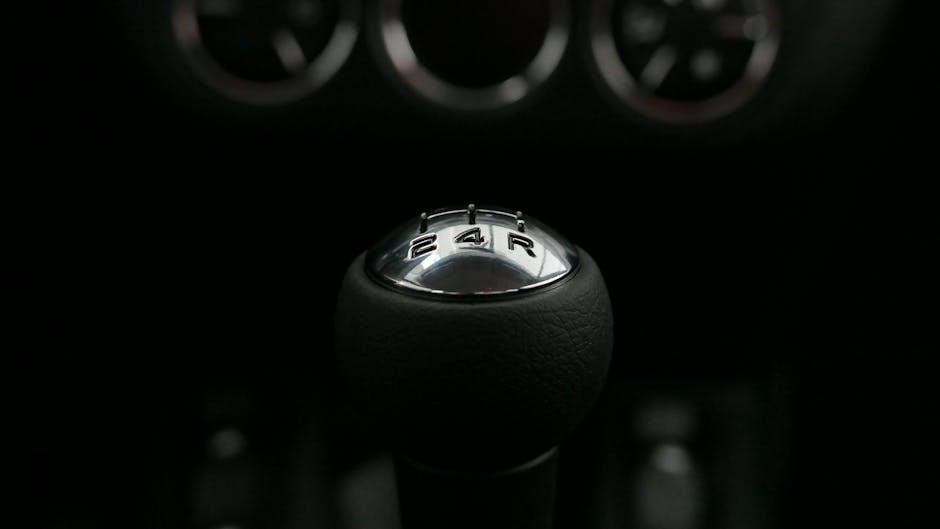
The Nissan Skyline GT-R (R34), affectionately nicknamed “Godzilla,” achieved iconic status, particularly within the Japanese domestic market and among tuning enthusiasts worldwide. Produced from 1999 to 2002, the R34 represented the pinnacle of the GT-R lineage, blending advanced technology with formidable performance.
Powered by a 2.6-liter twin-turbocharged RB26DETT inline-six engine, the R34 GT-R delivered around 276 horsepower (officially), though its true potential was significantly higher with modifications. Coupled with a robust 6-speed manual transmission and an advanced all-wheel-drive system (ATTESA E-TS PRO), it offered exceptional grip and acceleration.
Stock R34 GT-Rs could achieve 0-60 mph in around 4.6 seconds, with well-maintained examples capable of even quicker times. Its legendary status was further cemented by its success in motorsport, particularly in the Japanese GT Championship. The R34’s blend of performance, technology, and tuning potential continues to captivate car enthusiasts today.
Ford Mustang Boss 302 (2012) ⎻ Modern Classic
The 2012 Ford Mustang Boss 302 represented a thrilling return to a legendary nameplate, delivering a focused, track-ready experience for driving purists. It wasn’t simply a cosmetic upgrade; Ford extensively reworked the Mustang to enhance its performance capabilities, creating a modern muscle car with serious credentials.
Powered by a 5.0-liter “Coyote” V8 engine, the Boss 302 produced 420 horsepower and 380 lb-ft of torque, paired exclusively with a 6-speed manual transmission. Significant chassis and suspension upgrades, including adjustable dampers and larger sway bars, dramatically improved handling and responsiveness.
The 2012 Boss 302 could sprint from 0-60 mph in just over four seconds, showcasing its impressive acceleration. Its track-focused design included unique aerodynamic elements and a revised cooling system; This Mustang wasn’t just about straight-line speed; it was engineered to excel on the racetrack, earning its place as a modern classic.

The Technology Behind the Speed
Advanced engine designs, like turbocharging, and optimized transmission gear ratios are crucial. Aerodynamic efficiency and lightweight materials further contribute to the exceptional speed of these cars.
Engine Technology: Turbocharging and Naturally Aspirated
The heart of any fast manual car is its engine, and the choice between turbocharging and naturally aspirated designs significantly impacts performance characteristics. Turbocharged engines, like those found in many modern performance cars, utilize exhaust gases to spin a turbine, forcing more air into the cylinders. This results in a substantial power increase for a given engine size, delivering quicker acceleration and higher top speeds.
Naturally aspirated engines, however, offer a different experience. They rely solely on atmospheric pressure to fill the cylinders, providing a more linear power delivery and a distinct engine note; While typically requiring larger displacement to achieve comparable power figures to turbocharged counterparts, naturally aspirated engines are often praised for their responsiveness and simplicity.
Cars like the Porsche 911 GT3 RS often employ naturally aspirated engines, prioritizing driver feel and track performance. Conversely, many other high-performance manual cars, such as some variants of the Chevrolet Corvette, leverage turbocharging to maximize power output. The optimal choice depends on the manufacturer’s specific goals and the desired driving experience.
Transmission Design: Gear Ratios and Shifting Speed
The manual transmission itself is a critical component in maximizing the performance of these fast cars. Gear ratios are meticulously engineered to optimize acceleration and top speed. Shorter ratios in lower gears provide quicker off-the-line acceleration, while taller ratios in higher gears enhance top-end speed and fuel efficiency.
The speed and precision of gear changes are equally important. A well-designed gearbox with a short throw shifter allows for rapid and seamless transitions between gears, minimizing power interruption and maintaining momentum. Synchromesh technology ensures smooth engagement, even during aggressive shifting.
Many high-performance manual cars feature six-speed transmissions, offering a balance between performance and usability. The dual-mass flywheel, found in some models, helps to dampen vibrations and improve shift quality. Ultimately, the transmission’s design must complement the engine’s power characteristics to deliver the optimal driving experience, allowing drivers to fully exploit the car’s potential.
Aerodynamics: Reducing Drag and Increasing Downforce
Aerodynamic efficiency plays a pivotal role in achieving high speeds, particularly in the fastest manual cars. Reducing drag – the resistance of air against the vehicle – is paramount for maximizing top speed and acceleration. This is achieved through streamlined body shapes, underbody panels, and careful attention to airflow management.
Equally important is generating downforce, which presses the car onto the road, enhancing grip and stability, especially at high velocities. Active aerodynamic elements, such as adjustable spoilers and wings, are frequently employed to optimize downforce based on speed and driving conditions.
Diffusers at the rear of the car help to manage airflow, creating a low-pressure area that further increases downforce. Wind tunnel testing and computational fluid dynamics (CFD) are essential tools used by manufacturers to refine the aerodynamic properties of these performance vehicles, ensuring optimal balance between drag reduction and downforce generation.
Weight Reduction: The Importance of Lightweight Materials
Minimizing weight is a fundamental principle in building the fastest manual cars, directly impacting acceleration, braking, and handling. A lower curb weight translates to a superior power-to-weight ratio, allowing the engine to propel the vehicle with greater efficiency.
Manufacturers employ a variety of lightweight materials to achieve this goal. Carbon fiber reinforced polymers (CFRP) are extensively used in body panels, chassis components, and interior trim, offering exceptional strength-to-weight ratios. Aluminum alloys are also prevalent in suspension parts and engine blocks.
Even seemingly minor weight savings, such as utilizing lighter wheels and tires, contribute significantly to overall performance. Reducing unnecessary mass improves responsiveness and agility, enhancing the driving experience. The Toyota GR Yaris, for example, benefits from a focus on lightweight construction, contributing to its impressive performance.
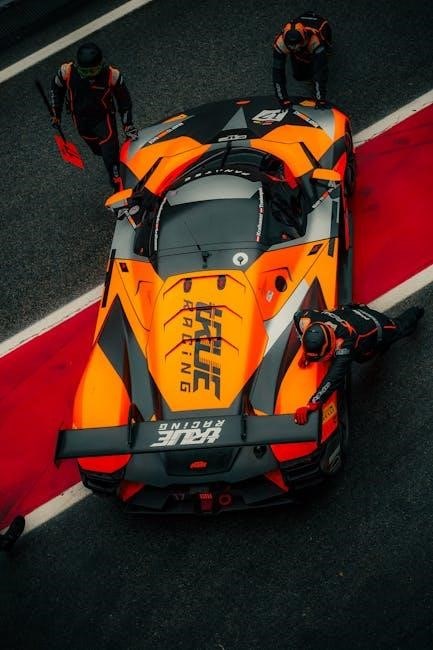
The Future of Manual Transmissions
Despite the rise of automatics, manuals persist due to driver engagement. Hybrid and electric vehicles could incorporate manual modes, blending efficiency with a connected feel.
Are Manuals Dying? A Look at Current Trends
The automotive landscape is undeniably shifting towards automatic transmissions, raising concerns about the future of manual gearboxes. Sales figures demonstrate a consistent decline in manual transmission vehicle purchases over the past decade, particularly in North America. However, a dedicated enthusiast base continues to champion the manual experience, influencing manufacturers to retain them in select performance models.
Several factors contribute to this trend. Automatics, especially dual-clutch transmissions, often offer faster shift times and improved fuel efficiency. Ease of use is also a significant draw for many drivers, especially in congested urban environments. Yet, the tactile connection and driver control offered by a manual remain highly valued by enthusiasts.
Interestingly, certain manufacturers, like Porsche with the 911 GT3 RS and Toyota with the GR Yaris, continue to prioritize manual options in their fastest cars. This suggests a recognition that the manual transmission enhances the driving experience and appeals to a specific, passionate customer segment. The survival of manuals, therefore, hinges on their continued presence in performance vehicles and the sustained demand from driving purists.
The Role of Driver Engagement
The core appeal of a manual transmission in a fast car lies in the heightened level of driver engagement it provides. Unlike automatics, manuals demand active participation – selecting gears, controlling the clutch, and modulating throttle – fostering a direct connection between driver and machine. This involvement translates to a more immersive and rewarding driving experience, particularly on challenging roads or race tracks.
This engagement isn’t merely about control; it’s about feel. Drivers can precisely tailor engine speed to road conditions, optimizing performance and maximizing enjoyment. The satisfaction of a perfectly executed downshift or a smooth gear change adds a layer of skill and artistry often absent in automatic driving.
For enthusiasts of the fastest manual cars, this connection is paramount. It’s about being an active participant in the driving process, not just a passenger. The ability to dictate the car’s behavior, to truly feel the road, elevates the experience beyond simple speed and into the realm of visceral excitement. This is why, despite advancements in automatic technology, the manual persists in performance vehicles.
Potential for Hybrid and Electric Manuals
The future of manual transmissions, even in the realm of fastest cars, is inextricably linked to the rise of hybrid and electric powertrains. While seemingly counterintuitive – manuals traditionally rely on internal combustion engines – innovative solutions are emerging to preserve the driver engagement they offer.
For hybrids, a manual transmission could be coupled with an electric motor to fill torque gaps and enhance efficiency; This would allow drivers to select gears while benefiting from the instant torque of the electric motor. However, complexities arise in seamlessly integrating the two power sources.
Electric vehicles present a greater challenge, as they lack traditional gearboxes. Yet, concepts involving single-speed transmissions with simulated gear changes, offering the feel of a manual without the mechanical complexity, are being explored. These systems aim to replicate the engagement of a manual through software and haptic feedback. Whether these solutions will truly capture the essence of a traditional manual remains to be seen, but the desire for driver involvement persists, driving innovation in this space.